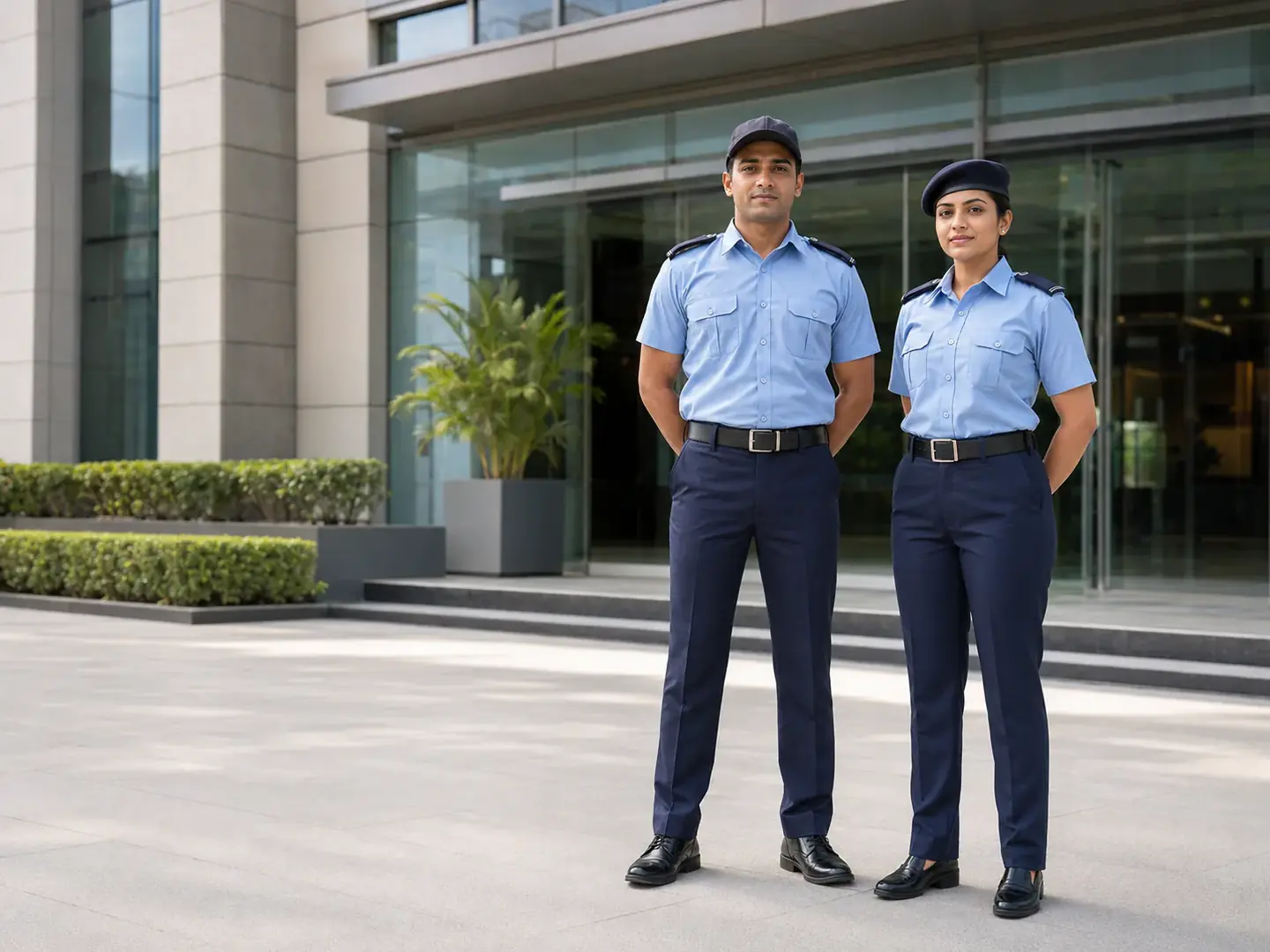
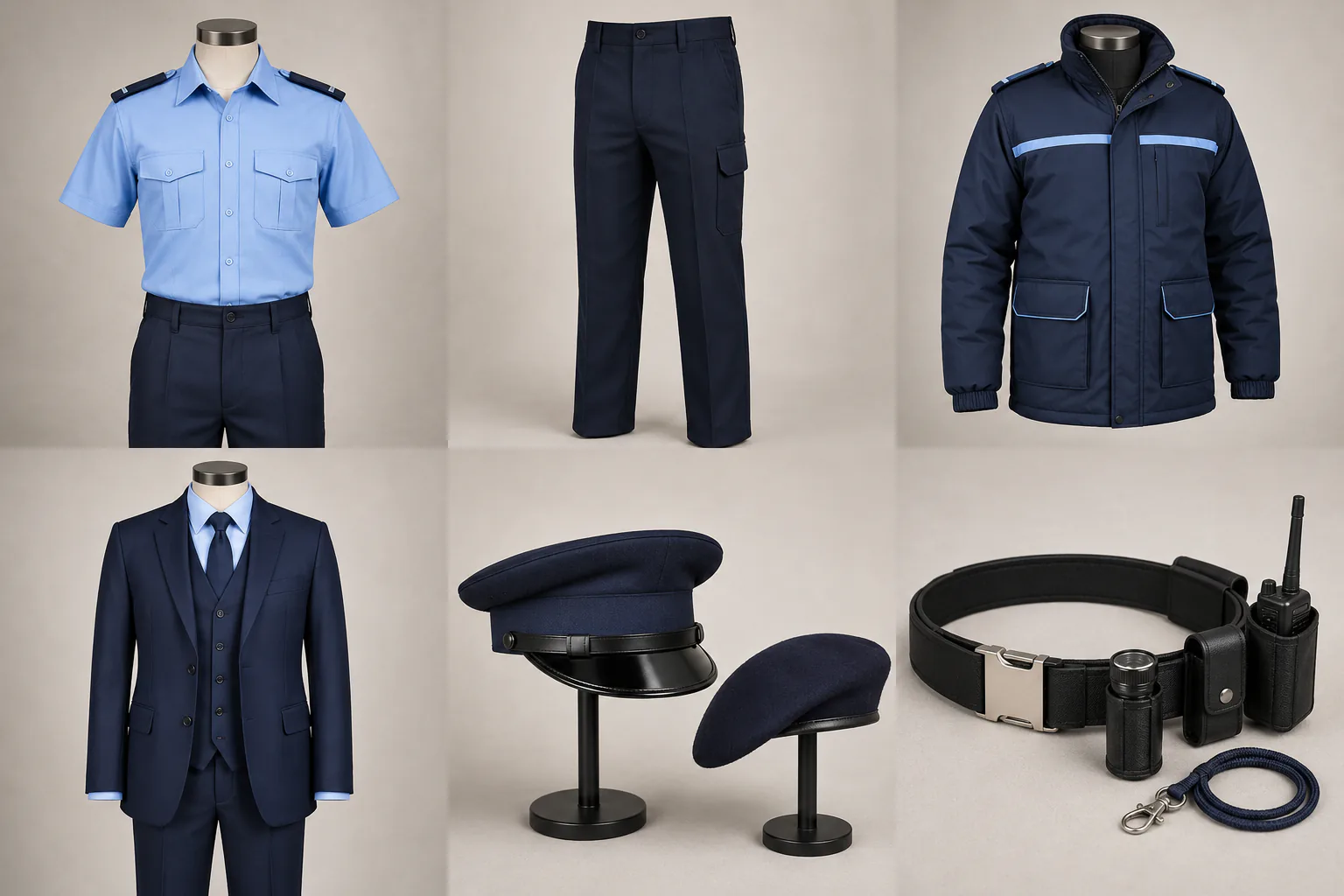
Security shirts and trousers
Available with approved fabrics, colours, sizing and organisation-specific branding.
Get a Bulk QuoteCUSTOM DESIGN · BULK MANUFACTURING
Custom security uniforms for agencies, housing, corporate sites and institutions with durable construction, role identity and seasonal layers. Sampling, size development, custom branding, quality checks and PAN India delivery are coordinated through one accountable programme.
PURPOSE-BUILT UNIFORMS
Epaulettes, pockets, rank identifiers, caps and belts create authority, but practical movement and climate comfort remain essential. Supervisor garments can be distinct without disconnecting from the guard uniform.
Agencies frequently issue uniforms by client contract. Packing by site, employee category and size helps prevent mixing and supports documented handover.
BR MODE manufactures uniforms in Faridabad, Haryana, for organisations across India. Our service covers requirement planning, material guidance, sample development, bulk production, branding and organised dispatch. We do not treat every buyer as a request for a logo on a ready-made garment; the wearer’s work and the organisation’s identity guide the specification.
PRODUCT RANGE
Choose a focused set or coordinate several related styles under one approval system.
Available with approved fabrics, colours, sizing and organisation-specific branding.
FABRIC OPTIONS
Security clothing must remain presentable through long shifts, outdoor posts, walking and repeated use. Fabric choices consider heat, winter exposure, shade stability and the organisation’s maintenance arrangement.
Final fabric recommendations consider climate, shift duration, indoor or outdoor use, wash frequency, expected garment life, opacity, stretch, colour availability and budget. Buyers can compare swatches and sample garments before committing to bulk production. Fabric batches and future availability can vary, so planned reorders are preferable to emergency replication after a material has been discontinued.
COLOURS & SIZES
Khaki, navy, grey, black and organisation-specific shades can be coordinated with piping, shoulder details and rank markings. Outdoor visibility and dust exposure are considered before final selection.
Duty belts, winter layers and movement affect fit. Samples verify shirt length, trouser ease, sleeve movement and the relationship between base garments and jackets.
Standard available shades are usually the most practical choice for moderate quantities. Custom dyeing can be explored for suitable volume, lead time and testing. Size allocation uses the approved size set; labels alone are not assumed to be interchangeable between different patterns or suppliers. We encourage organisations to record employee sizes against the physical reference that was actually approved.
CUSTOM BRANDING
Agency logos, client-site identifiers, employee names and rank marks can be embroidered or applied through approved badges. Placement is controlled so the uniform remains clear rather than crowded.
Branding options include logo embroidery, employee-name embroidery, department identification, selected printing methods, woven labels, contrast trims, piping and private labels. Artwork is checked at actual production scale because very fine lines, small lettering and dense fills may require simplification. Thread shades, placement measurements and approved samples become part of the production reference.
The branding method is matched to the garment and intended care routine. Embroidery offers a durable professional result for many woven garments, while printing may be appropriate for selected graphics, performance materials or larger designs. No method is automatically correct for every fabric.
MANUFACTURING PROCESS
The process creates visible approvals before volume is produced and keeps the final order tied to one agreed reference.
We document wearer roles, quantities, climate, working conditions, brand direction, wash method, budget and target date. This prevents a visually attractive but operationally unsuitable uniform from moving forward.
Silhouettes, pockets, closures, trims, role hierarchy and practical details are translated into a coherent range. Existing samples or brand guidelines can be used when the organisation is upgrading rather than starting fresh.
Relevant materials and available shades are compared for comfort, appearance, maintenance, durability and commercial quantity. Custom-developed colours are discussed separately because they may change MOQ and timing.
Patterns convert the approved concept into a real garment. A physical sample allows stakeholders and wearers to judge fit, movement, proportion, branding position and workmanship before approving volume.
A controlled size range is prepared around the selected fit. The buyer uses these references for allocation, and any role-specific or gender-specific differences are recorded before the final quantity breakup.
Bulk fabric is reviewed for visible quality and shade consistency, then laid and cut in controlled batches. Size and component identification help protect order accuracy through the sewing stages.
Garments move through planned assembly, reinforcement and finishing operations. Approved embroidery, printing, labels or other identity details are applied at the specified scale, colour and placement.
Measurements, construction, seams, fasteners, pockets, colour, branding and finishing are compared with the approved sample. Issues are corrected before packing rather than being passed to distribution teams.
Uniforms can be folded, labelled and grouped by role, size, employee, department or location. Final counts and dispatch planning provide a cleaner handover for single-site and multi-location buyers.
MOQ & BULK PRICING
Our minimum order quantity generally starts from 50 pieces. The applicable MOQ depends on garment type, number of designs, fabric, colour, trims, logo method and size distribution. A custom-dyed fabric, specialised trim or highly fragmented order may need a larger quantity than a standard available material. We confirm the practical MOQ after reviewing the complete brief rather than promising one number for every product.
Bulk pricing is calculated from material consumption, garment construction, order quantity, branding, size range, packing and delivery. Lower unit pricing normally becomes possible when compatible garments and colours are consolidated, but the lowest rate should not come at the cost of unsuitable fabric or weak construction. The quotation clearly identifies the offered scope so buyers can compare like with like.
Production generally requires three to six weeks after sample approval, subject to quantity, fabric availability and customisation. The wider project also needs time for requirement mapping, quotation, sample development, stakeholder feedback and size collection. Organisations working toward an opening, academic session, onboarding date or contract mobilisation should plan backward from the required delivery date.
QUALITY & REPEAT SUPPLY
Checks include pocket and epaulette attachment, seam reinforcement, button security, measurement, badge positioning, colour consistency and pressing.
The agency should confirm role hierarchy, accessories, seasonal quantities and any client-specific branding before sampling to avoid conflicting identities.
Quality is controlled through clear references, not broad claims alone. The approved sample, size set, colour selection, artwork and packing brief give production and inspection teams measurable points to follow. Repeat orders use the documented programme, although material availability and natural batch variation are reconfirmed before each new production run.
For multi-location or multi-department buyers, uniforms can be packed by branch, role, department, employee group or size. This reduces sorting after delivery and provides a more useful handover to HR, administration, stores or site teams. PAN India dispatch is planned according to the final order volume and destination structure.
FREQUENTLY ASKED QUESTIONS
Yes. Rank identifiers, names, logos and approved badge placements can be developed into the programme.
Yes. Jackets, sweaters and other coordinated layers can be included.
Yes. Packing can be separated by client, site, designation and size.
Coordinated accessories can be included according to the approved requirement and quantity.
Production generally takes three to six weeks after sample approval, depending on quantity, fabric availability and customisation. Sampling and approvals need additional time.
Yes. We provide planned PAN India dispatch and can organise packing by branch, role, department or size.
PLAN YOUR BULK ORDER
Share your organisation, garment types, estimated quantity, colours, branding and target date. The requirement will go directly to the BR MODE lead desk.
START YOUR UNIFORM PROJECT